
Imarcrohit
Automotive Display System Market Size, Share and Trends 2025-2033
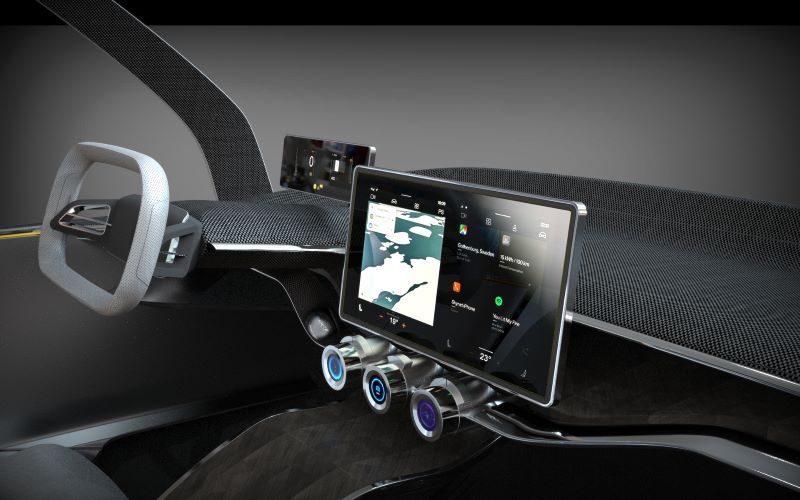
Market Overview:
The Automotive Display System Market is witnessing substantial growth, driven by the Convergence of AI-Driven Digital Cockpits, The Dominance of Software-Defined Vehicle (SDV) Architectures, and Strategic Integration of Immersive Mixed-Reality (MR) Interfaces. According to IMARC Group’s latest research report, “Automotive Display System Market: Global Industry Trends, Share, Size, Growth, Opportunity and Forecast 2025-2033”, The global automotive display system market size was valued at USD 17.19 Billion in 2024. The market is projected to reach USD 35.03 Billion by 2033, exhibiting a CAGR of 7.82% from 2025-2033.
This detailed analysis primarily encompasses industry size, business trends, market share, key growth factors, and regional forecasts. The report offers a comprehensive overview and integrates research findings, market assessments, and data from different sources. It also includes pivotal market dynamics like drivers and challenges, while also highlighting growth opportunities, financial insights, technological improvements, emerging trends, and innovations. Besides this, the report provides regional market evaluation, along with a competitive landscape analysis.
Download a sample PDF of this report: https://www.imarcgroup.com/automotive-display-system-market/requestsample
Our Report Includes:
- Market Dynamics
- Market Trends and Future Outlook
- Competitive Landscape
- Industry Segmentation
- Strategic Recommendations
Growth Factors in the Automotive Display System Industry:
- Convergence of AI-Driven Digital Cockpits
The automotive display is no longer a passive information screen; it has evolved into a unified "Digital Cockpit" where the instrument cluster, infotainment, and passenger displays operate on a single high-performance compute platform. Driven by advancements in AI-led voice assistants and natural language processing, these displays now offer context-aware interactions. In 2026, systems are increasingly capable of interpreting driver intent and emotion—adjusting display themes or brightness based on stress levels—transforming the interior into a highly personalized living space.
- Dominance of Software-Defined Vehicle (SDV) Architectures
The shift toward SDVs is decoupling hardware from software, allowing manufacturers to update display functionalities and user interfaces over-the-air (OTA). This provides a significant market driver as it extends the lifecycle of the display system, enabling "Feature-on-Demand" (FoD) subscription models. Consumers can now unlock new visualization modes or augmented reality (AR) features long after the initial vehicle purchase. This flexibility is particularly crucial in the electric vehicle (EV) segment, where displays are the primary interface for complex battery management and energy-flow visualizations.
- Strategic Integration of Immersive Mixed-Reality (MR) Interfaces
Safety and navigation are being redefined by Augmented Reality Head-Up Displays (AR-HUDs), which project real-time data directly into the driver’s line of sight. By overlaying navigation arrows, pedestrian alerts, and lane-departure warnings onto the actual road surface, these systems drastically reduce cognitive load and eyes-off-road time. In 2026, the adoption of AR-HUDs is expanding from luxury tiers into high-volume mid-segment vehicles, as cost-effective holographic optical elements (HOE) and waveguide technologies become more widely available.
Key Trends in the Automotive Display System Market:
- Rise of "Pillar-to-Pillar" and Curved Panoramic Displays
A major design trend is the transition from localized central touchscreens to massive, seamless "Pillar-to-Pillar" (P2P) displays that span the entire width of the dashboard. Manufacturers are utilizing flexible OLED and Mini-LED technologies to create curved panels that conform to the vehicle's interior contours. These ultra-wide screens provide dedicated real estate for co-driver entertainment and panoramic navigation, creating a cinematic experience that serves as a key brand differentiator for premium OEMs.
- Mainstreaming of OLED and MicroLED Technology
To meet the rigorous visibility demands of automotive environments, there is a clear shift toward OLED and MicroLED panels. Unlike traditional LCDs, these technologies offer superior contrast ratios, deeper blacks, and higher brightness, ensuring legibility even under direct, harsh sunlight. Flexible OLEDs, in particular, are enabling "free-form" displays—such as digital side-view mirrors and curved center consoles—which reduce interior weight and provide designers with unprecedented creative freedom.
- Multi-Modal Interfaces with Haptic and Gaze Tracking
The 2026 market is seeing a move toward multi-modal interaction, where displays respond to a combination of touch, voice, gesture, and gaze. Gaze-tracking sensors embedded in the display can determine which part of the screen the driver is looking at, automatically highlighting relevant information or dimming secondary displays to minimize distraction. Furthermore, the integration of advanced haptic feedback provides tactile "clicks" on flat glass surfaces, allowing drivers to operate climate or audio controls by feel, bridging the gap between digital convenience and physical safety.
We explore the factors driving the growth of the market, including technological advancements, consumer behaviors, and regulatory changes, along with emerging automotive display system market trends.
Leading Companies Operating in the Global Automotive Display System Industry:
- Alps Alpine Co. Ltd.
- AUO Corporation,
- Continental AG
- DENSO Corporation
- Innolux Corporation,
- Japan Display Inc. (Sony Corporation),
- LG Display Co. Ltd.
- Nippon Seiki Co. Ltd.
- Panasonic Holdings Corporation
- Robert Bosch GmbH
- Valeo SA
- Visteon Corporation
- YAZAKI Corporation.
Automotive Display System Market Segmentation
Breakup by Technology
- LCD
- TFT-LCD
- OLED
- Digital Lighting Processing (DLP)
- Plasma Panels
TFT-LCD accounts for the majority of the market share TFT-LCD displays dominate due to their superior image quality, vibrant color range, and cost-effectiveness compared to OLED.
Breakup by Display Size
- Less than 5”
- Between 6” to 10”
- Greater than 10”
Between 6” to 10” holds the largest share of the industry This size range provides an optimal balance between functionality and dashboard space utilization.
Breakup by Application
- Head-Up Display (HUD)
- Instrument Cluster
- Center Stack Display
- Rear Seat Entertainment Display
- Rear View Mirror Display
- Portable Navigation Device
- Others
Center Stack Display represents the leading market segment The center stack display is pivotal for infotainment, connectivity, and vehicle controls, making it the most dominant application segment.
Breakup by Vehicle Type
- Passenger Vehicle
- Hatchback
- Sedan
- Utility Vehicles
- Light Commercial Vehicle
- Buses & Coaches
- Trucks
Passenger vehicle exhibits a clear dominance in the market Rising consumer preference for connected and tech-enabled vehicles has made passenger cars the largest segment.
Breakup by Sales Channel
- OEM
- Aftermarket
OEM dominates the market share OEMs lead due to factory-fitted integrated display solutions in new vehicles, ensuring seamless functionality and compatibility.
Breakup by Region
- North America (United States, Canada)
- Asia Pacific (China, Japan, India, South Korea, Australia, Indonesia, Others)
- Europe (Germany, France, United Kingdom, Italy, Spain, Russia, Others)
- Latin America (Brazil, Mexico, Others)
- Middle East and Africa
Asia Pacific leads the market, accounting for the largest automotive display system market share Asia Pacific dominates due to its robust automotive production base, growing disposable incomes, and increasing demand for advanced infotainment systems.
Note: If you require specific details, data, or insights that are not currently included in the scope of this report, we are happy to accommodate your request. As part of our customization service, we will gather and provide the additional information you need, tailored to your specific requirements. Please let us know your exact needs, and we will ensure the report is updated accordingly to meet your expectations.
About Us:
IMARC Group is a global management consulting firm that helps the world’s most ambitious changemakers to create a lasting impact. The company provide a comprehensive suite of market entry and expansion services. IMARC offerings include thorough market assessment, feasibility studies, company incorporation assistance, factory setup support, regulatory approvals and licensing navigation, branding, marketing and sales strategies, competitive landscape and benchmarking analyses, pricing and cost research, and procurement research.
Contact Us:
IMARC Group
134 N 4th St. Brooklyn, NY 11249, USA
Email: sales@imarcgroup.com
Tel No:(D) +91 120 433 0800
United States: +1–201971–6302
by Imarcrohit on 2026-01-22 05:14:23
No comments yet.